Permissions & Audit Controls
Permissions, Consent, And Audit Controls For Embedded Accounting
Permission Controls
Control Access With Confidence
Set clear permissions across people, workflows, and connected systems.
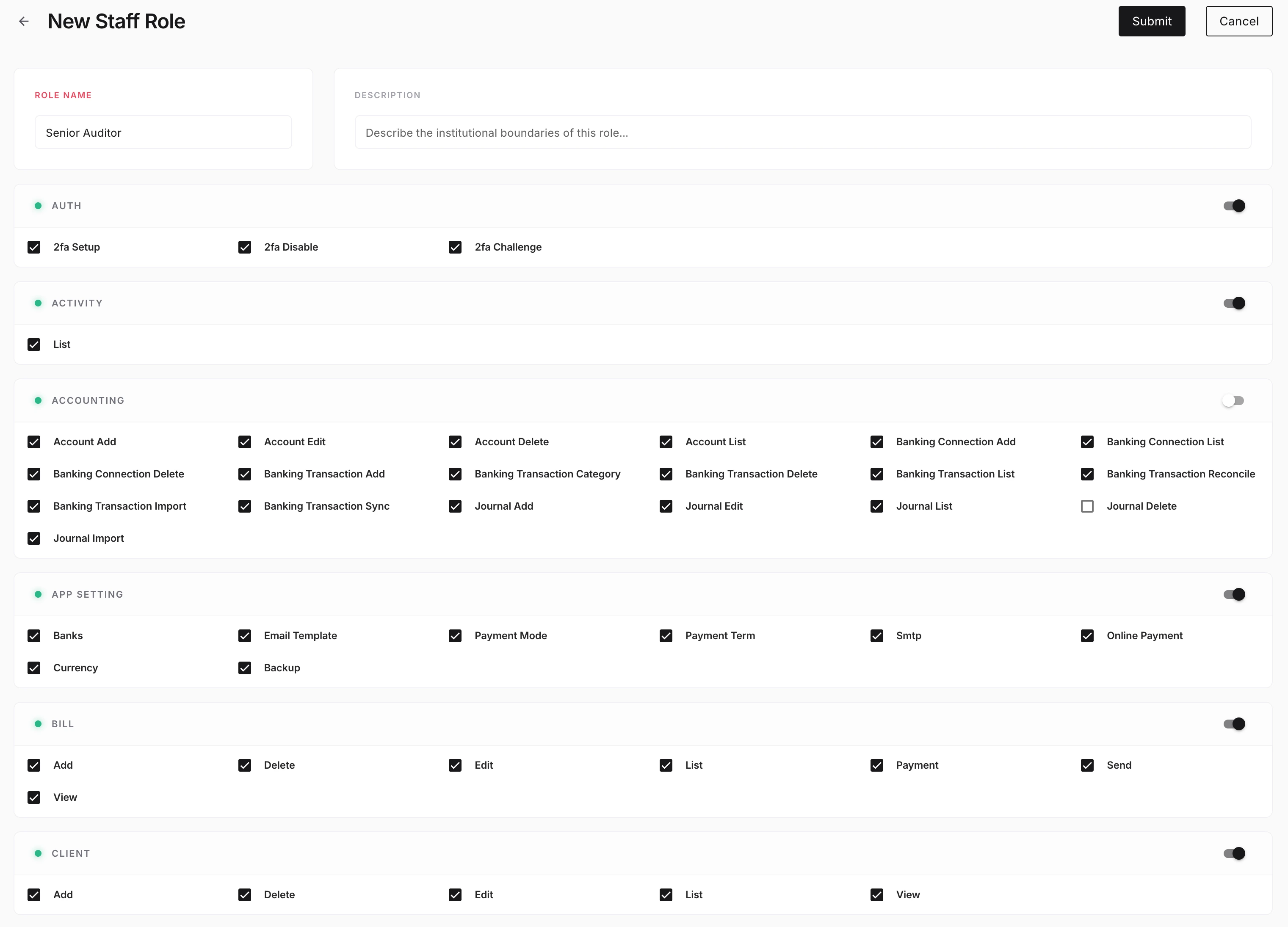
Role-Based Access Control
Create roles that reflect how your team actually works, from finance approvers to read-only reviewers and external collaborators.
Granular Access Controls
Limit visibility and actions where needed so the right people can work without exposing more than necessary.
User Access Management
Add, update, and remove team access more cleanly as responsibilities change.
Permissions also matter at the MCP and OAuth edge
Team permissions are only part of the control model. When external systems, MCP clients, or AI workflows connect to accounting actions, access should stay consent-driven, tightly scoped, approval-aware, and visible to operators.
Explicit consent before external tools can reach accounting actions
Granular permissions tied to the workflow and tool scope being granted
Approval and draft-first behavior for sensitive accounting actions
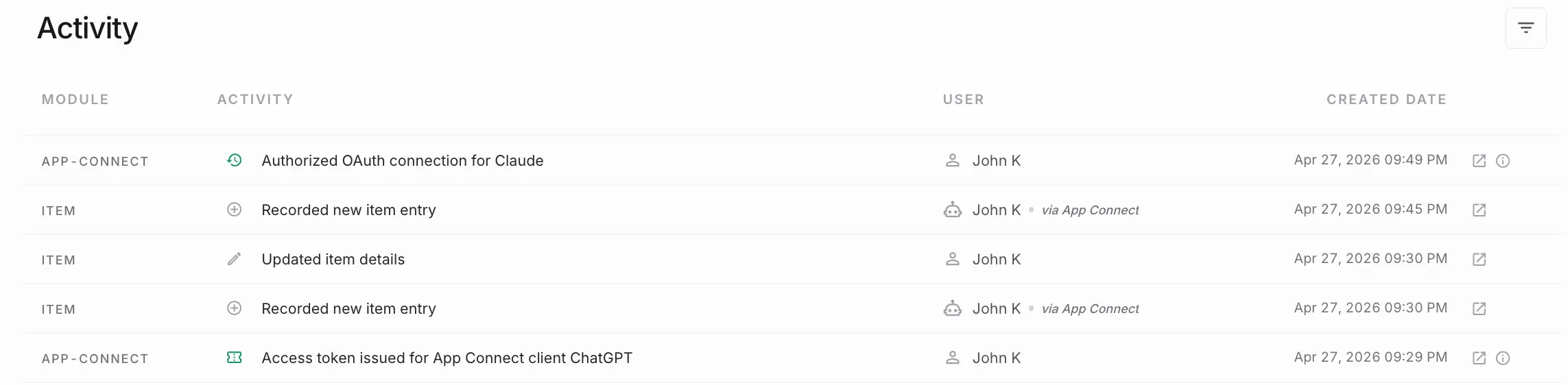
Visible activity history so operators can review what was accessed or triggered
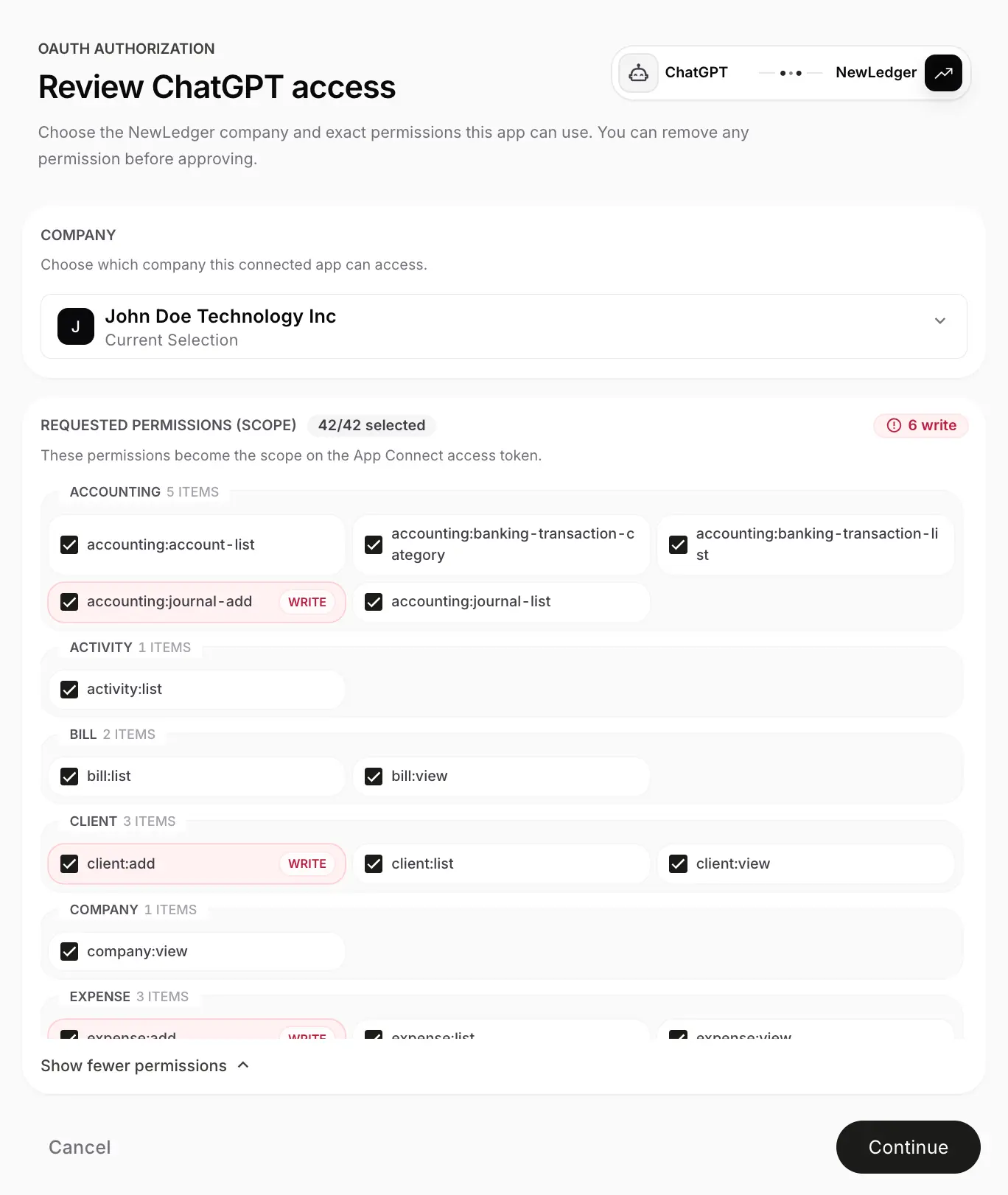
A governed consent flow helps teams expose accounting capabilities without giving broad unrestricted access.
Operator visibility after access is granted
Activity history gives operators and reviewers a clear record of what MCP clients or connected systems accessed, requested, or triggered after consent was granted.
Key Permission And Audit Features
Keep access, approvals, and accountability clearer across finance and operational workflows.
Role Definition
Define which roles can access the areas and workflows relevant to their responsibilities.
Permission Assignment
Control actions at a more detailed level so teams can work safely inside shared systems.
Separation Of Duties
Support cleaner review and approval boundaries when one person should not control the whole workflow.
Audit Trails
Keep a reviewable history of who changed what so teams can understand access and workflow decisions later.
Everything on this page is an API call away
These workflows ship inside your product through the same endpoints, signed webhooks, and MCP tools proven in production today. Sandbox keys are self-serve — post a journal before you talk to anyone.
{
  "role_name": "finance-reviewer",
  "role_description": "Read reports, approve journals",
  "is_active": true,
  "role_permission": [ … ]
}- GET
/v1/acl/role - GET
/v1/acl/permission - POST
/v1/acl/role
Live paths from the OpenAPI spec — same wire format in sandbox and production.
Build in sandbox, launch with a production trial
Use sandbox for developer testing with no billing. When you are ready for real workflows, start production on a monthly plan with a 14-day free trial.